A supplier’s catalogue cannot tell you whether a product protects your workers during a specific task, fits with the rest of their equipment, or will remain available when stock is urgently needed. By the end, you will have a screening process for checking conformity evidence, testing a supplier, comparing total procurement effort, and retaining records that support audits and incident investigations.
Key takeaways
- Document each task’s hazards before comparing PPE suppliers.
- Request product-level conformity declarations, test reports, batch details, and instructions.
- Check that PPE fits together as a complete system without creating new hazards.
- Pilot the selected PPE and retain records of fit, use, defects, and training.
Start with the Hazard Assessment, Not the Supplier Catalogue
A catalogue is not a hazard assessment. Begin with a documented hazard assessment for each task, recording the source, severity, exposure time, number of workers, and consequence of PPE failure.
Include falling objects, electrical contact risks, chemical splash, dust, noise, heat, cuts, crushing and puncture hazards instead of selecting a broad category such as “site PPE.”
1. Map hazards to people and tasks in a role-based PPE matrix. State the required protection, fit, dexterity, visibility, communication and compatibility for each role, including workers who wear spectacles, facial hair, prescription lenses or other equipment.
2. Set measurable performance requirements before comparing brands. For chemical gloves, specify the chemical, concentration, temperature, contact duration and required dexterity; request permeation and breakthrough data. For hearing protection, calculate protection from the exposure and derated NRR, not the largest printed NRR.
3. Define respirator controls in advance. A tight-fitting model requires documented fit testing before use and at least annually in the United States, with a new test after any change in make, model, style or size.
For cartridges without an end-of-service-life indicator, require service-life data, a written change schedule and storage-life information; odour is not a change-out method.
4. Add the ownership requirements: inspection, cleaning, maintenance, replacement parts, compatible consumables and traceable replacement stock. Then send the same specification to every supplier, so you compare evidence against one requirement rather than comparing attractive catalogue descriptions.
Demand Product-Level Conformity and Test Evidence
Ask for evidence tied to the exact item before accepting a supplier’s claim. The file should name the manufacturer legal name, product model, batch or lot number, manufacturing date, applicable standard, user instructions, and traceability record. A brochure describing a product family does not prove that the delivered model passed the claimed test.
Request these records:
- The Indian Standard Mark and BIS licence number, then match the licence record to the exact manufacturer and product model. “ISI marked” alone is not verification.
- The test report identifying the tested model, configuration, standard, laboratory, test date, and result.
- For Category III PPE in the EU, the EU Declaration of Conformity, EU type-examination certificate, notified-body details, and instructions covering the intended use.
- For respirators, the NIOSH approval number and complete configuration: manufacturer, model, cartridge or filter combination, and approved parts. Check it in the NIOSH Certified Equipment List; an equivalent-looking substitute can void the approval basis.
| Product category | Evidence to compare | Failure the test exposes |
|---|---|---|
| Industrial helmet | IS 2925 or claimed equivalent; impact, penetration, and electrical-insulation results | A shell that cracks, penetrates, or fails electrical protection |
| Safety footwear | IS 15298 or claimed equivalent; toe-cap compression, impact, puncture, and slip tests | Crushing, sharp-object penetration, or slips |
| Safety spectacles | IS 5983 or claimed equivalent; impact, optical quality, and chemical-splash evidence | Distorted vision, lens fracture, or splash entry |
| Protective gloves | Cut or heat test rating; electrical gloves need IS 4770 voltage class and dielectric test | Cuts, burns, or shock through insulation |
Reject reports that omit the model or traceability numbers.
Check Whether the PPE Works as a Complete, Fitted System
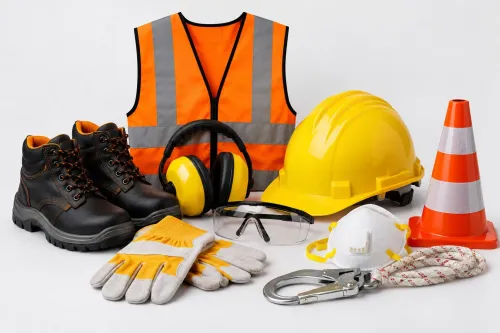
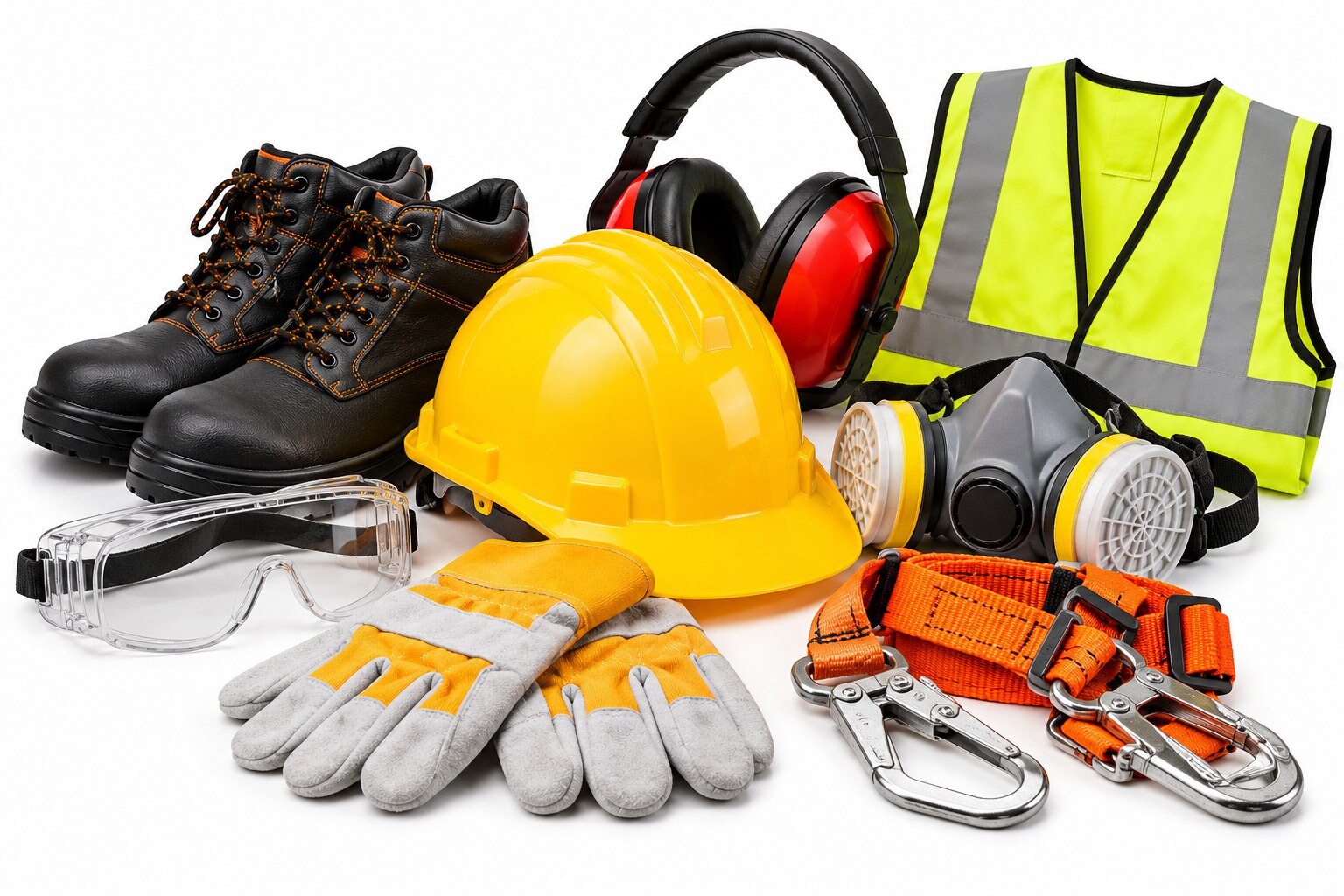
Approve PPE only after a worker performs the task wearing the complete combination: helmet, eye protection, hearing protection, gloves, footwear and respirator where required. An individually compliant item can still interfere with another, break a respirator seal, reduce visibility or leave skin exposed.
Use a supervised fit-and-use check on the people who will wear it. Record these checks:
- Helmet: confirm the suspension stays adjusted during movement and that helmet impact and penetration protection matches falling-object or electrical-contact hazards.
- Footwear: verify toe-cap protection against crushing and impact, plus footwear toe-cap and slip resistance performance on the actual floor, oil or wet surface.
- Eye protection: check that spectacle impact and optical quality allow clear vision without distortion, gaps or fogging. Choose chemical goggles versus safety spectacles according to splash and vapour exposure; spectacles do not seal against liquid chemicals.
- Gloves: match the material to the chemical, concentration, temperature and contact time. Ask for permeation and breakthrough data, not simply a “chemical resistant” label, and check dexterity.
- Respirators and accessories: verify the exact approved manufacturer, model, approval number, filter or cartridge and configuration. A substitute cartridge can invalidate the approval basis.
Ask workers to demonstrate donning, adjustment, cleaning, storage and replacement. Reject equipment that causes pressure points, obscures controls, catches on machinery or encourages users to remove it; those failures turn technically suitable PPE into ineffective protection.
Compare Supplier Reliability, Service, and Total Procurement Effort
A dependable PPE supplier reduces interruptions after delivery; an attractive unit price does not. Compare the full procurement effort: lead times, minimum order quantities, size availability, replacement stock, delivery reliability, and the staff time needed to chase missing records or correct unusable items.
Request these records before ordering:
- Manufacturer’s legal name, exact product model, batch or lot number, manufacturing date, user instructions, test reports, and traceability records.
- Written lead times, minimum order quantities, size availability, back-order procedure, and a contact responsible for escalations.
- Cleaning instructions, inspection criteria, replacement parts, compatible consumables, storage-life data, and an authorised repair route.
- For cartridges without an end-of-service-life indicator, objective service-life data and a written change schedule; odour is not a safe trigger.
- For tight-fitting respirators, confirmation that a model change will not create avoidable fit-testing and training costs.
| Check | Dependable supplier | Unit-price supplier |
|---|---|---|
| Batch consistency | Supplies repeatable lots and investigates defects | Treats each delivery as interchangeable without evidence |
| After-sales support | Replaces damaged PPE and provides cleaning, repair, and retirement guidance | Offers no compatible parts or clear replacement route |
| Delivery control | Confirms stock, lead times, and escalation dates | Gives a low quote but misses required dates |
| Total cost | Includes fitting, training, inspection, and replenishment effort | Shifts those costs to your team |
For a local supplier such as INNOVATIVE SAFETY SOLUTIONS, use this same test for helmets, shoes, spectacles, and other PPE: documented service earns trust, not the lowest invoice.
Related products
 | Personal Protective Equipment (PPE) ⛑️ Safety Helmets – By Innovative Enterprises (Safetywala), Ambad, Nashik 📞 Contact: Mr. Mayur R. View product → |
 | INDUSTRIAL SAFETY SHOES 👞 Safety Shoes – By Innovative Enterprises (Safetywala), Ambad, Nashik 📞 Contact: Mr. Mayur R. View product → |
Run a Controlled Pilot and Build the Evidence Trail
Approve a new supplier only after a controlled supplier pilot using the exact model, size range, accessories, and consumables you intend to buy. Issue a limited quantity to representative workers performing the real task, then record fit checks, compatibility problems, donning errors, visibility, heat burden, mobility, and worker feedback.
Set acceptance criteria before the trial starts. Reject the supplier if the PPE fails the hazard requirement, workers cannot achieve a reliable fit, instructions are unclear, or the supplier cannot provide replacement parts and cleaning guidance.
Keep an evidence file for every approved model. Include:
- Manufacturer’s legal name, product model, batch or lot number, manufacturing date, user instructions, conformity documents, test reports, and traceability records
- Pilot dates, participating tasks, worker feedback, fit checks, training completion, and corrective actions
- Delivery checks, batch records, cleaning and storage instructions, replacement dates, and inspection records
- Defect reports, removed-from-service decisions, supplier responses, repairs, and replacement parts
Review the file after incidents, product changes, failed inspections, or a new hazard. For respirators, record the exact approved facepiece, cartridge or filter combination, approval number, and change-out schedule; never substitute an apparently equivalent component. For firefighting ensembles, confirm the supplier supports the inspection, cleaning, repair, storage, and retirement regime described by NFPA 1851.
Retain the approval decision and review date so purchasing cannot silently replace a proven model with a cheaper variant.
Frequently asked questions
What should you assess before choosing a PPE supplier?
Document each task’s hazard source, severity, exposure time, worker count, and the consequence of PPE failure before reviewing supplier catalogues.
What evidence should a PPE supplier provide?
Request product-level conformity documents, applicable standard references, test reports, user instructions, batch or lot details, and traceable manufacturer information.
Why must PPE be checked as a complete system?
Helmets, eye protection, respirators, hearing protection, gloves, footwear, and clothing must work together without interfering with fit, movement, visibility, or protection.
How can you compare PPE suppliers beyond product price?
Compare stock availability, lead times, replacement support, sizing and fitting help, training, complaint handling, documentation, and the internal effort required to manage orders.
What should a PPE pilot record?
Record worker fit and comfort feedback, task performance, compatibility issues, defects, cleaning needs, training completion, and corrective actions before wider rollout.
Related products
 | Industrial Safety Equipments By Innovative Enterprises (Safetywala), Ambad, Nashik 📞 Contact: Mr. Mayur R. View product → |
 | Hearing & Eye Protection ₹48 🥽 Safety Spectacles – By Innovative Enterprises (Safetywala), Ambad, Nashik 📞 Contact: Mr. Mayur R. View product → |
 | Industrial Safety By Innovative Enterprises (Safetywala), Ambad, Nashik 📞 Contact: Mr. Mayur R. View product → |
 | Industrial Safety By Innovative Enterprises (Safetywala), Ambad, Nashik 📞 Contact: Mr. Mayur R. View product → |