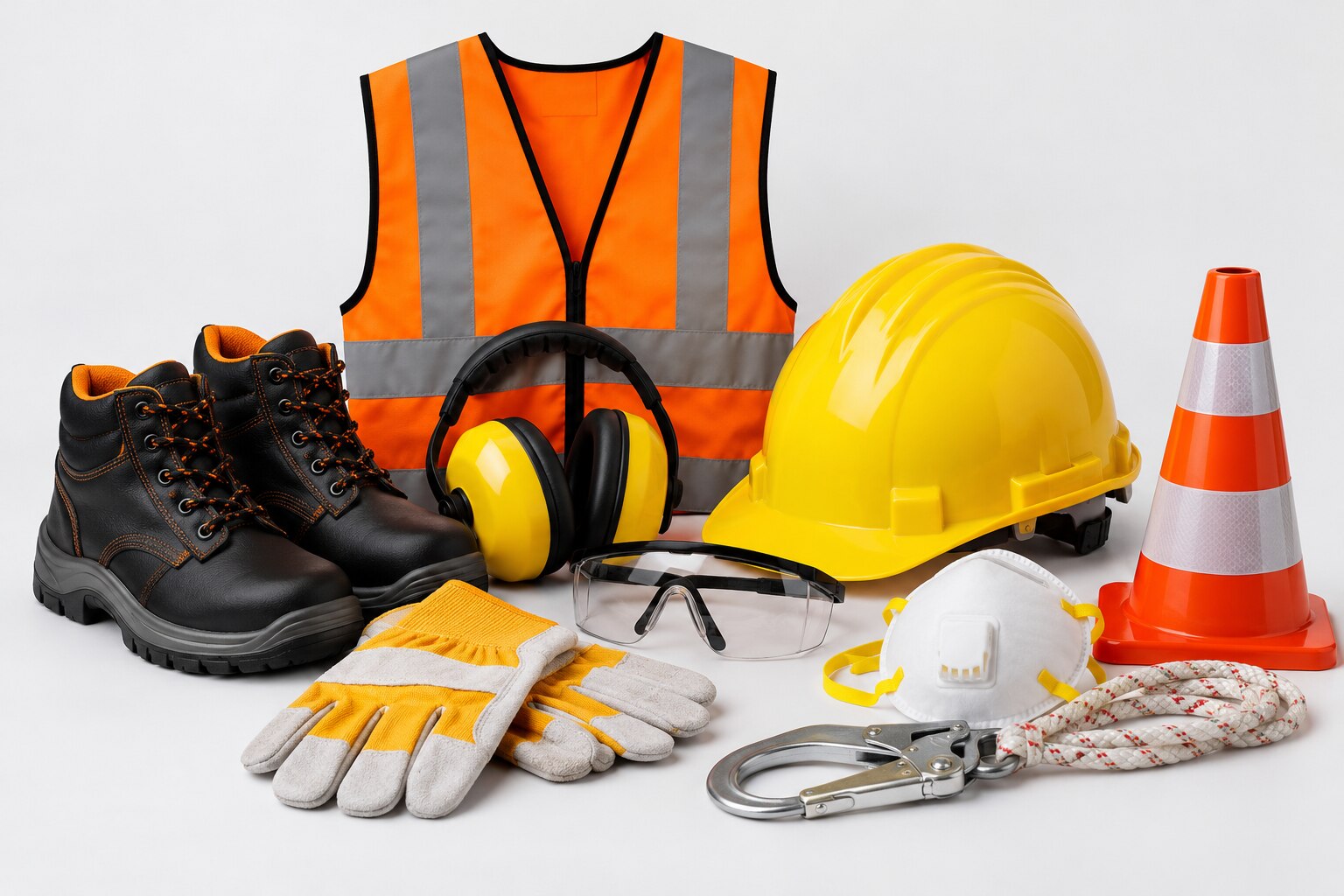
A safer worksite begins before anyone requests cones, barriers, marking materials or PPE: you must identify the hazard, define the control and specify how it will be installed, used and checked. By the end, you will have a practical method for mapping different work areas, comparing temporary and permanent controls, and using supplier support without handing over your safety responsibilities.
Key takeaways
- Document hazards, exposed people, existing controls and performance gaps before requesting materials.
- Match barriers, signs and surface controls to traffic speed, visibility and ground conditions.
- Specify PPE by standards, protection level, fit, compatibility and replacement criteria.
- Require delivery checks, installation briefings, inspections and stock records for every control.
Start with a Hazard Map Before You Request Materials
Collect a documented hazard assessment before requesting a product recommendation or quote. Record the work activity, hazard, exposed people, location, duration, frequency, existing controls and the performance gap you need to close. A generic site safety kit cannot determine compliance.
1. Map each area: construction site safety zones, warehouse safety aisles and loading bays, factory hazards mapping, welfare areas, chemical stores and vehicle routes. Add a sketch, photographs, dimensions and surface conditions.
2. Record traffic details, including vehicle types, speeds, turning points, pedestrian crossings, lighting, wind exposure and visibility requirements.
3. For chemicals, provide the exact product name, concentration, temperature, contact method and exposure time. Request the current safety data sheet, label details and glove permeation and breakthrough data; “nitrile” alone is not a specification.
4. For PPE, state the hazard, required sizes, users, fit-test needs and current certification. For respirators, provide the complete NIOSH approval number and approved component configuration.
5. For fall-arrest systems, provide anchor locations, worker height and weight, lanyard or lifeline type, deployment distance and available clearance. The system must keep free fall within 6 feet and arresting force within 1,800 pounds.
6. Ask for stock levels, replacement triggers, issue records, approved equivalents and SDS revision control. Keep SDSs readily accessible during every shift, and review any substitution against the original assessment.
Match the Control to the Site, Traffic and Surface
Choose the control by asking what must stay visible, what may be struck, and whether the surface allows bonding or anchoring. Temporary controls manage changing hazards; permanent controls suit stable routes and boundaries.
| Option | What it means | When it applies |
|---|---|---|
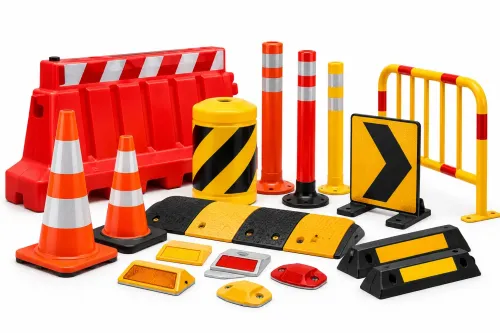
| Traffic cones | Portable warning and channelising devices | Short-duration work, pedestrian separation, or changing vehicle paths; select height, base weight, retroreflective bands and wind stability for the site |
| Water-fillable traffic safety barriers | Connected temporary barriers that gain stability when filled | Protecting workers from vehicles at low-speed areas; verify capacity, connection, drainage and placement |
| Thermoplastic paint | Heat-bonded, durable pavement marking | Repeated vehicle movement on prepared asphalt or concrete where lanes, arrows or stop lines must remain visible |
| Floor-marking tape | Adhesive indoor marking | Clean, dry, smooth floors in warehouses and factories; replace it when edges lift or forklifts tear the surface |
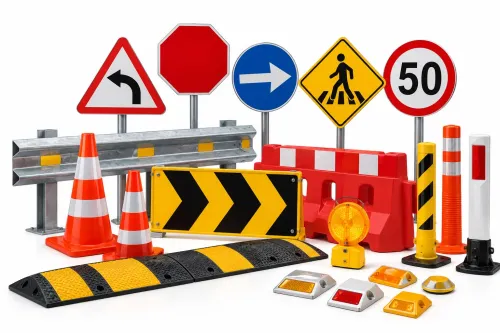
Do not treat a bright product as a crashworthy device. For roadwork, match signs, drums, barricades, delineators and attenuators to the applicable Manual on Uniform Traffic Control Devices requirements, including mounting, spacing and impact performance.
Use taller, heavier-base cones where vehicles travel faster, wind is strong or pedestrians pass close by. Install thermoplastic only after removing oil, dust and moisture; paint over a contaminated surface will peel. Apply floor-marking tape after cleaning and drying the floor, then inspect its edges during each shift.
A supplier should provide the placement plan, surface-preparation method and inspection criteria—not just the material.
Specify PPE and High-Risk Equipment by Performance
Choose PPE by the energy, substance and duration of the exposure, not by colour or appearance. The hazard assessment remains the employer’s responsibility, while a supplier should translate it into tested specifications, compatible components and usable sizes.
Ask the supplier to document:
- PPE selection against the task, exposure route, work duration and required standard.
- High-visibility garment type and ANSI/ISEA 107 performance class; workers near public traffic or construction equipment need more than a bright colour.
- Helmet fit, shell class, electrical rating, suspension adjustment and compatibility with hearing or face protection.
- Eye protection matched to impact, dust, chemical splash, molten metal or optical radiation; sealed goggles or a face shield are not interchangeable with clear safety glasses.
- Safety shoes specification, including toe protection, puncture resistance, slip resistance and electrical-hazard protection where the assessment demands them.
- Chemical-glove compatibility data for the named chemical, concentration, temperature, contact time and glove thickness. “Nitrile” or “PVC” alone proves nothing about breakthrough or immersion use.
For respirators, verify the complete NIOSH approval number and its exact facepiece, cartridge and filter combination. Parts that fit physically can still invalidate the approval. For specialist equipment, request operating limits, inspection criteria and replacement triggers rather than a product photograph.
Keep approved-equivalent lists and size-based stock levels. Review every substitution against the hazard assessment and certification; a similar-looking item can have a different performance limit.
Turn Delivery Into Installation, Briefing and Inspection
A supplier should stay involved after delivery by providing installation instructions, placement confirmation, worker briefing materials and an inspection schedule. Safety equipment installation must match the site plan: an incorrectly anchored barrier, blocked extinguisher or poorly positioned sign creates confidence without control.
Request these handover items:
- Drawings, anchor details, spacing requirements and a named contact for installation questions.
- A worker briefing covering correct use, limits, emergency actions and reporting of damage.
- SDSs linked to the exact chemical product and concentration, with revision dates; keep them accessible during every shift.
- Inspection forms, replacement criteria and service records. For extinguishers, designated personnel need monthly visual checks, while fire extinguisher maintenance requires an annual maintenance check and a controlled service tag.
| Control type | Installation focus | Checks that keep it effective |
|---|---|---|
| Temporary cones or barriers | Height, retroreflective bands, stable bases and spacing for traffic, wind and pedestrians | Displacement, damage, night visibility and water-ballast condition |
| Permanent markings | Correct surface preparation, line width, curing time and layout | Wear, contamination, loss of contrast and changes to traffic routes |
| Fall-arrest equipment | Compatible harness, connector and anchorage with clearance calculated for deployment and worker height | Webbing, stitching, hardware, labels, impact history and available clearance |
Record each inspection, defect, repair and replacement. A supplier can support the process, but the employer must confirm that controls still match the documented hazard assessment.
Use Inventory and Records to Keep Safety Controls Working
A stockout turns a known hazard into an uncontrolled one. Ask your supplier to set min/max levels for helmets, spectacles, gloves, footwear, high-visibility garments and other regularly issued PPE, using worker counts, shift patterns, lead times and seasonal demand. Review the figures after workforce or task changes.
PPE issue records show who received which size, model, batch and date. They expose repeated losses, poor fit and unusual consumption, while an approved-equivalent list prevents a buyer from replacing a certified item with something that only looks similar. Review every substitute against the original hazard assessment, performance limits and certification.
Use written replacement triggers rather than waiting for a complaint:
- Replace fall-arrest equipment after a fall, damaged webbing, deployed energy absorber or failed inspection.
- Replace cones, barriers and markings when cracking, loss of retroreflective material, instability or poor visibility makes the control ineffective.
- Replace extinguishers after discharge, damage or an inspection failure, and retain annual maintenance records alongside frequent visual-inspection checks.
For chemicals, SDS management means linking the current safety data sheet to the exact product and concentration, controlling revisions and keeping it accessible during every shift. An old shared folder is not a reliable record.
INNOVATIVE SAFETY SOLUTIONS can support this system by supplying repeat items against agreed specifications and helping match delivery records to issue, inspection and replacement logs. Your employer still owns the hazard assessment, training and final approval.
Related products
 | Road & Workplace Safety ₹250 🚧 Traffic Safety Cones – By Innovative Enterprises (Safetywala), Ambad, Nashik 📞 Contact: Mr. Mayur R. View product → |
 | Hearing & Eye Protection ₹48 🥽 Safety Spectacles – By Innovative Enterprises (Safetywala), Ambad, Nashik 📞 Contact: Mr. Mayur R. View product → |
Frequently asked questions
What should you document before requesting construction safety materials?
Record the work activity, hazard, exposed people, location, duration, frequency, existing controls and the performance gap to close.
How do you match a safety control to a worksite?
Assess site layout, vehicle and pedestrian traffic, visibility, weather, surface condition, installation method and the control’s required performance.
How should you specify PPE and high-risk equipment?
State the hazard, protection level, applicable standard, fit requirements, equipment compatibility, inspection criteria and replacement conditions.
What should happen when safety materials are delivered?
Check quantities and condition, install controls correctly, brief workers on use, inspect them at defined intervals and record maintenance or replacement.
Related products
 | Personal Protective Equipment (PPE) ⛑️ Safety Helmets – By Innovative Enterprises (Safetywala), Ambad, Nashik 📞 Contact: Mr. Mayur R. View product → |
 | INDUSTRIAL SAFETY SHOES 👞 Safety Shoes – By Innovative Enterprises (Safetywala), Ambad, Nashik 📞 Contact: Mr. Mayur R. View product → |
 | Road Safety Interlocking Water/Sand Fillable Barrier Interlocking Water Fillable Barrier - By Innovative Enterprises (Safetywala), Ambad, Nashik 📞 Contact: Mr. Mayur R. View product → |
 | Road Safety By Innovative Enterprises (Safetywala), Ambad, Nashik 📞 Contact: Mr. Mayur R. View product → |