
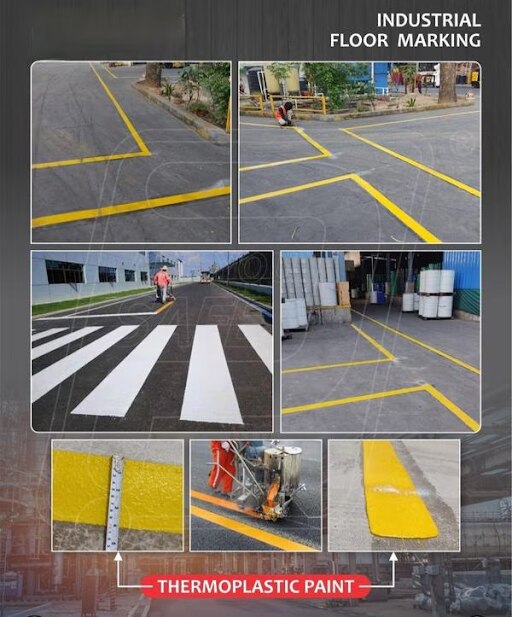
A low price per bag does not tell you what a road marking will cost after heating, installation, traffic wear and repainting. You need to compare the formulation, evidence, application method and supplier support against the pavement and traffic conditions at your site. By the end, you can turn those checks into a purchase specification and a defensible supplier shortlist.
Key takeaways
- Compare installed coverage, not price per bag.
- Request formulation data, batch details and test reports before purchase.
- Approve a site trial on your pavement before full installation.
- Put surface preparation, application limits and warranty remedies in writing.
What exactly are you buying when a supplier says “thermoplastic”?
A price per bag tells you little until you know how much installed marking that bag produces. Require the thermoplastic paint formulation, supplied mass, density, application loss allowance and coverage at the specified line width and film thickness.
Ask the supplier to identify:
- Binder chemistry: hydrocarbon resin or alkyd resin
- Pigment system, filler content, colour and glass-bead content
- Hot-applied granules or preformed sheets
- Application temperature and maximum heating temperature
- Primer status for asphalt and concrete: mandatory, optional or prohibited
- Compatibility with existing paint, epoxy, methyl methacrylate and thermoplastic markings
Sprayed and screeded or extruded material are not interchangeable. Compare them on the same dimensions:
| Option | Film and profile information | Coverage and use |
|---|---|---|
| Sprayed thermoplastic | State line thickness separately from total profile height; supplier must provide its applied coverage rate | Suits thinner, wider-area applications; account for spray loss |
| Screeded or extruded thermoplastic | State the deposited thickness, total profile height and permitted installation tolerance | Uses more material per square metre but provides a heavier wear layer |
| Preformed thermoplastic | State sheet thickness, dimensions and overlap or trimming allowance | Useful for symbols and specialist markings; compare waste from cutting |
Calculate installed cost from square metres or linear metres, not bags or tonnes. A cheaper formulation can cost more after higher thickness, density, primer, glass beads or application waste are included.
For each pavement type, require preparation instructions covering moisture, oil, dust, curing compounds, loose aggregate and poorly bonded old markings. A field trial on the actual asphalt or concrete can expose adhesion failure before full purchase.
What test evidence proves the marking will perform?
A brochure proves composition; a test report proves performance. Require reports tied to the supplied formulation and mapped to the relevant Indian Roads Congress guidance and MoRTH specifications, not generic claims of “road-grade” material.
Ask for these documents before approval:
- A certificate of analysis or conformity for each production batch, stating colour, softening point or flow behaviour, glass-bead content and distribution, and abrasion or dimensional results where specified.
- Independent or accredited test reports showing dry retroreflectivity, wet-night retroreflectivity where rain exposure matters, colour compliance, colour retention after defined weathering, and installed skid resistance.
- Glass-bead records covering gradation, coating, cleanliness, moisture and application rate. Buried beads give weak retroreflectivity; loose beads disappear under traffic.
- A sample identification linking the test report, batch number, manufacture date and delivery lot. A product tested last year is not evidence for an untraceable batch.
Use the contract to name the test method and minimum value for skid resistance and retroreflectivity. Test skid resistance on the installed marking: a smooth, thick film can reduce texture, while aggregate or profiled material can improve grip but alter noise and bead performance.
| Evidence type | What it proves | Reject when |
|---|---|---|
| MoRTH and IRC conformity | Specified material and application performance | Only a logo or undated declaration |
| Laboratory test report | Measured colour, flow, abrasion and visibility | No method, specimen or result |
| Batch certificate | Delivered material matches approved product | Batch number is missing |
| Wet-visibility test | Rain performance | Dry retroreflectivity alone is offered |
| Plow-environment evidence | Resistance to blade damage | Warranty silently excludes plow routes |
Can the supplier control installation on your actual pavement?
A supplier can control installation only if it gives you a pavement-specific method, not a generic thermoplastic data sheet. Require the method before awarding the work, then test it on each actual surface: sound asphalt, concrete, and any existing marking system.
1. Specify the heating method, equipment, maximum safe temperature, and application temperature for the exact formulation. Require continuous temperature checks with a calibrated thermometer. For preformed material, identify whether torch, infrared, or hot-applied adhesive activation is required, along with pavement-temperature limits and traffic-opening time.
2. State the target film thickness, measurement method, and acceptable tolerance. Tie material quantity to line width, film thickness, density, and application losses; a low price per bag does not prove a low installed cost.
3. Define the glass beads by size distribution, coating, cleanliness, moisture condition, and application rate. Require the installer to show how bead embedment will be checked: deeply buried beads lose retroreflection, while poorly embedded beads disappear under traffic.
4. Give surface-preparation steps for oil, dust, loose aggregate, curing compounds, moisture, and weak old markings. State whether a concrete primer is mandatory, optional, or prohibited, and confirm compatibility with existing paint, epoxy, methyl methacrylate, or thermoplastic.
The field trial must use the proposed equipment, application temperature, film thickness, and glass beads on your pavement. Reject the method if adhesion, appearance, bead retention, or opening time fails inspection.
Will thermoplastic survive your traffic, weather and operating conditions?
A durable marking is a site match, not a material label. For heavy trucks, turning movements and braking, require abrasion results and retained retroreflectivity data—not only an initial dry reading. Intermixed beads and correctly applied drop-on beads must keep guiding drivers after the surface wears.
Monsoon rain creates a separate wet-night visibility problem: water can mask conventional exposed beads. High-speed or rain-exposed roads need wet-retroreflectivity evidence and a wet-recovery design, such as profiled geometry or a larger or different bead system.
Check these site-specific failure points before choosing the material:
- On snowplow routes, demand evidence for the specified plow environment. Raised profiles, thick legends and loose edges can be cut by blades; put any plow-damage exclusion in the warranty.
- On concrete, require the supplier to state whether primer is mandatory, optional or prohibited. Confirm compatibility with existing paint, epoxy, methyl methacrylate and thermoplastic.
- Separate initial colour compliance from colour durability. Specify the white or yellow standard and a weathering or colour-retention test to expose yellowing, chalking or pigment loss.
- Ask for the binder chemistry, pigment and filler system, glass-bead content and application temperature. These details affect bonding and service life.
| Thermoplastic | Thick, hot-applied film suited to high traffic and established pavements | Choose with bead-retention and wear evidence |
|---|---|---|
| Cold plastic | Reactive, high-build system that suits some repairs, symbols and difficult surfaces | Compare curing time, compatibility and repair method |
| Paint | Thin, lower-build film with simpler application | Use where traffic is light or frequent renewal is acceptable |
What supplier support belongs in the purchase order and warranty?
Make the purchase order bind the supplier to the evidence and site controls that determine performance, not just to a quantity of bags or a colour code.
Require each delivery to carry a lot number linked to its certificate of analysis, production date, resin and pigment description, softening or flow result, glass-bead content or gradation, and relevant abrasion or dimensional results.
1. Require batch traceability from the manufacturer to the installed location. The supplier must record lot numbers, delivery dates, storage conditions, pallet and packaging condition, and retained samples. Reject unlabelled or damaged packs.
2. Require an application method statement naming the heating equipment, temperature controls, film thickness and tolerance, bead type and application rate, surface-cleaning method, and primer status for asphalt and concrete. Ask for records proving the crew has applied hot thermoplastic under comparable conditions.
3. Approve a field trial on every pavement type before full installation. Measure adhesion, thickness, bead embedment, appearance, skid resistance and retroreflectivity after installation; record the substrate, weather and application temperatures.
Write the warranty around a defined inspection period and measurable failures, such as peeling, cracking, premature bead loss, colour failure or inadequate retroreflectivity. It must state who inspects, response times, repair or replacement obligations, traffic-control costs and exclusions for oil, failed substrate or unauthorised repairs.
INNOVATIVE SAFETY SOLUTIONS should provide this same documentation before award, not after a defect appears.
Related product
 | Road Safety By Innovative Enterprises (Safetywala), Ambad, Nashik 📞 Contact: Mr. Mayur R. View product → |
Frequently asked questions
What should you compare when buying thermoplastic paint?
Compare formulation, supplied mass, density, application loss and coverage at the required line width and film thickness—not only the price per bag.
What test evidence should a thermoplastic paint supplier provide?
Ask for batch-linked test reports covering properties such as glass-bead content, softening point, colour, skid resistance and abrasion performance against the project specification.
How can you confirm thermoplastic will work on your pavement?
Require a controlled site trial that records surface preparation, pavement temperature, heating temperature, application thickness, glass-bead drop rate and resulting bond.
What conditions affect thermoplastic road-marking durability?
Traffic volume, turning movements, pavement type, surface moisture, temperature, ultraviolet exposure, monsoon water and chemical contamination all affect service life.
What should the purchase order and warranty specify?
Specify product identification, delivery condition, preparation, application limits, inspection records, repair responsibilities, performance criteria and the remedy for premature failure.