A low-cost shipment of mismatched, undocumented or unavailable safety equipment can leave workers exposed and make a hazard-control program impossible to maintain. By the end, you will have a practical way to assess supplier dependability, match equipment to hazards, verify conformity and manage replenishment after delivery.
Key takeaways
- Match every purchase to a documented hazard assessment.
- Request batch numbers, test reports and manufacturer authorisation before ordering.
- Compare PPE by standard, fit, protection level and approved configuration.
- Set reorder points, inspection routines and user training with your supplier.
What Dependability Means Beyond Having Products in a Catalogue
Dependability means more than a product catalogue: it means reliable supply, clear evidence, and support that remains useful after delivery. A dependable industrial safety material supplier consistently provides:
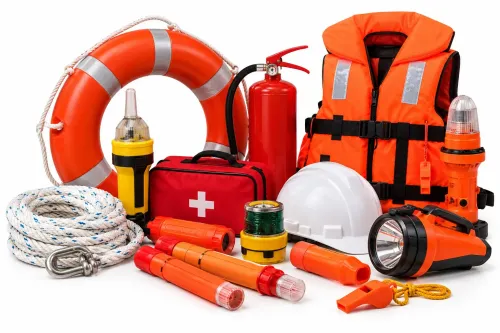
- Stock continuity, with reorder points and shelf-life controls for respirator cartridges, eyewash fluids, batteries, adhesives and first-aid contents.
- A defined response time for urgent requests, shortages, damaged goods and safety-critical replacements.
- Delivery coverage that reaches each worksite, including remote projects and temporary road-work locations.
- Replacement handling that records the item, batch or lot number, warranty terms and reason for failure.
- Technical guidance based on your hazard assessment, employee fit, equipment placement and intended use—not a generic substitute.
- Documented quality control, including manufacturer traceability, invoices, test reports and conformity documents.
The supplier must also know when a product alone is insufficient. First-aid contents depend on hazards, workforce, location and access to medical care; ANSI/ISEA Z308.1 does not replace that assessment.
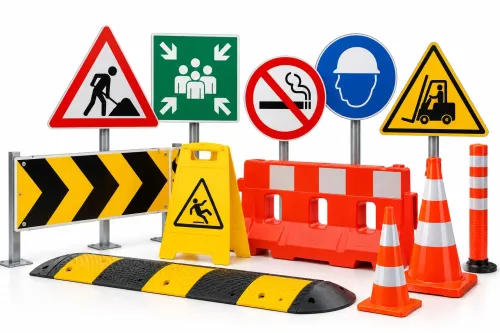
Eyewash and emergency showers require suitable placement, access, testing and maintenance, while traffic-control equipment needs the applicable MUTCD specification rather than an assumption that every cone or barricade is equivalent.
Ask how the supplier controls storage, expiry, inspection and replenishment. Cheap bulk stock becomes waste—or unsafe equipment—when packaging is damaged, chemicals degrade or PPE no longer fits the worker who must rely on it.
Match Each Purchase to a Documented Workplace Hazard
Start with a documented hazard assessment, not a catalogue. Record the task, exposure, affected workers, severity, duration and emergency response time; then make the PPE selection and material quantity traceable to that record.
| Hazard or need | Material to specify | Conformity evidence to retain |
|---|---|---|
| Falling objects or electrical contact | Helmet with specified type, class, suspension and accessories | Manufacturer instructions and test evidence to ANSI/ISEA Z89.1; for ISI-marked helmets, record the ISI mark and applicable BIS licence number |
| Chemical splash, dust or impact | Face shield, goggles or respirator matched to the substance and exposure | Standard named on the product, test report or manufacturer declaration, plus cartridge compatibility and change-out instructions |
| Cuts, punctures, crushing or slippery floors | Safety footwear with the required toe, penetration and slip protection | Applicable footwear standard, test report or manufacturer declaration; preserve the exact model and size range |
| Fire, injury or delayed medical access | Extinguishers or first-aid supplies selected for the hazard, workforce and response time | Extinguisher rating and service records; kit contents and expiry dates, with ANSI/ISEA Z308.1 treated as a product standard rather than a hazard assessment |
Check fit with each affected employee before accepting a substitution. A helmet accessory can alter the protective system, while a respirator that does not seal is not protection.
Set replenishment rules around expiry, storage temperature, contamination and packaging integrity. Count alone is unsafe: filters, eyewash fluid, adhesives, batteries and chemical garments can degrade in storage. Retain batch or lot numbers, delivery records and replacement dates so a failed item can be traced and removed.
Check the Supplier’s Business, Manufacturer and Quality Records
Before approving a safety-critical order, verify that the supplier can connect the invoice to the manufacturer, approved model, production batch and evidence supporting its claims. A polished catalogue proves nothing; missing records can turn a recall, failed inspection or warranty claim into a site-wide guessing exercise.
Request these records before payment:
- Legal business name, registered address, tax details and a properly itemised invoice.
- Manufacturer traceability showing the maker, model, approval or licence number, and authorised supply channel.
- Test reports naming the exact product, standard, test method, date and laboratory.
- Batch or lot identification printed on the product or packaging, not added only to a quotation.
- Written warranty terms stating coverage, duration, exclusions, claim evidence and replacement procedure.
- Current manufacturer instructions covering fitting, inspection, storage, cleaning and service life.
Then match the records to the equipment, not merely to its product category.
| Item | Records to match | Reject or pause if |
|---|---|---|
| Helmet | Type, electrical class, suspension and accessories against ANSI/ISEA Z89.1 evidence or the applicable BIS licence | The marking shows only an ISI symbol, with no identifiable licence or configuration |
| Respirator | NIOSH approval number, manufacturer, model and approved assembly in the Certified Equipment List | A seller substitutes a similar facepiece, cartridge, filter or assembly |
| Fall-arrest equipment | Component identity, inspection history, replacement control and manufacturer instructions | A defective component cannot be isolated by lot or serial number |
Retain these documents with your procurement and inspection records.
Compare PPE by Protection, Fit and Approved Configuration
A compliance label is only a starting point. Compare the protection tested, the wearer’s fit, and the exact configuration covered by the evidence; a substitute component or poorly fitted item can leave the hazard unchanged.
| Item | Compare protection | Check fit and configuration |
|---|---|---|
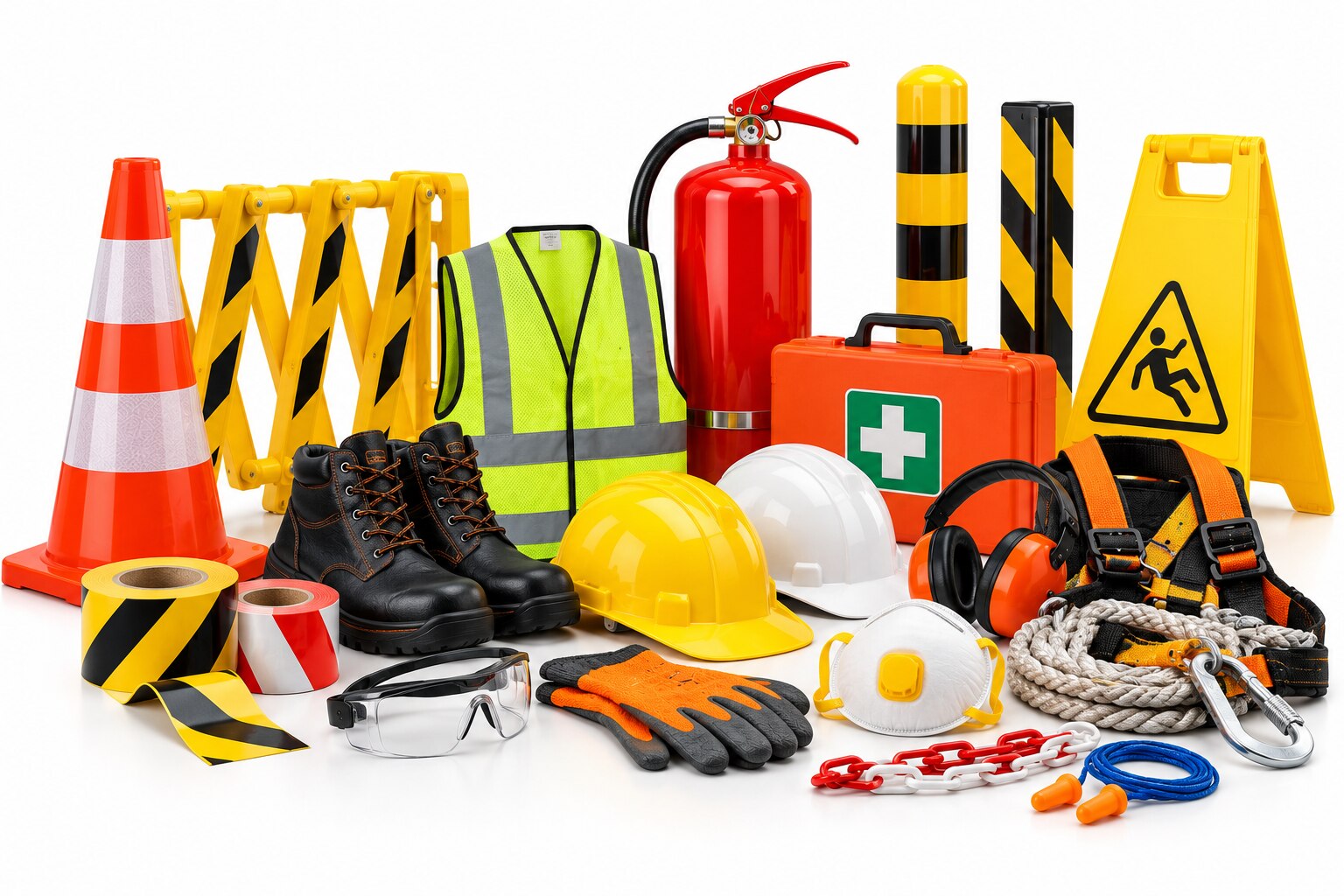
| Safety shoes | Verify toe impact and compression, puncture resistance, electrical properties, slip resistance and chemical or heat resistance against the hazard. Request the applicable test evidence, such as EN ISO 20345 or IS 15298. | Check toe-box space, heel retention, width and sole grip on the actual floor. Confirm the model and size range, not just a safety-toe label. |
| Safety helmets | Match the helmet type and electrical class under ANSI/ISEA Z89.1 to falling-object and electrical hazards. Record the manufacturer, helmet type, class, suspension and accessories. | Adjust the suspension without pressure points. Do not add unapproved attachments; a visor, winter liner or ear protection can affect the protective system. |
| Face shields | Select protection for impact, chemical splash, molten metal, dust or optical radiation. Under ANSI/ISEA Z87.1, verify the marking and test evidence. | Treat a face shield as secondary protection unless the manufacturer explicitly states otherwise; wear suitable safety glasses or goggles underneath. |
| Respirators | Match the respirator to the contaminant, concentration, oxygen level and required protection factor. Check the approval number, manufacturer, model and configuration in the NIOSH Certified Equipment List. | Complete medical evaluation and fit testing before use. Never substitute a similar facepiece, cartridge, filter or assembly; the approval applies to the tested configuration. |
Record shelf life, storage limits and replacement parts before ordering. Bulk stock that expires or degrades is not dependable protection.
Turn Product Supply into a Working Safety Program
A dependable supplier turns delivery into a documented site routine: each item is fitted, demonstrated, inspected, replaced and ready for the emergency it addresses. The handover should include named equipment, locations, inspection intervals, responsible employees, training records and a route for reporting defects.
- Confirm PPE fit with each wearer, including adjustment, seal checks and compatibility with other PPE. Record sizes and approved configurations so substitutions do not create new hazards.
- Train users through demonstrations, not a catalogue briefing. Cover donning, limitations, cleaning, storage, alarm response and disposal; repeat training after a process change or failed inspection.
- Set a shift-level inspection for fall-arrest equipment before initial use during each workshift. Tag defective harnesses, lanyards and connectors out of service, preserve their lot or serial details, and arrange controlled replacement.
- Provide a fire-extinguisher map, mounting guidance and employee practice. Selection and distribution must match the anticipated fire class and hazard; where OSHA applies, schedule monthly visual inspections and annual maintenance.
- Treat eyewash and emergency showers as installed systems: verify access, water flow, test frequency, signage and maintenance records rather than leaving units in storage.
INNOVATIVE SAFETY SOLUTIONS can support this handover by supplying inspection forms, replacement schedules and equipment traceability instead of treating the invoice as the end of service. Ask who responds to a recall, failed inspection or urgent shortage, and how quickly usable replacement stock reaches your site.
Related products
 | INDUSTRIAL SAFETY SHOES 👞 Safety Shoes – By Innovative Enterprises (Safetywala), Ambad, Nashik 📞 Contact: Mr. Mayur R. View product → |
 | Personal Protective Equipment (PPE) ⛑️ Safety Helmets – By Innovative Enterprises (Safetywala), Ambad, Nashik 📞 Contact: Mr. Mayur R. View product → |
Frequently asked questions
What makes an industrial safety material supplier dependable?
Dependability includes consistent stock, accurate specifications, traceable batch information, genuine manufacturer products, quality documents and useful support after delivery.
How should you decide which safety products to buy?
Start with a documented hazard assessment, then specify the hazard, exposure, task, required protection level and compatibility with existing equipment.
Which supplier records should you check?
Check the supplier’s legal business details, manufacturer authorisation, invoices, batch or lot traceability, test reports and certificates that match the exact product model.
How do you compare PPE beyond its price?
Compare the applicable standard, protection rating, fit range, material, comfort, service life, approved accessories and whether users can wear it correctly throughout the task.
Related products
 | Industrial Safety By Innovative Enterprises (Safetywala), Ambad, Nashik 📞 Contact: Mr. Mayur R. View product → |
 | Industrial Safety By Innovative Enterprises (Safetywala), Ambad, Nashik 📞 Contact: Mr. Mayur R. View product → |
 | Floor Safety By Innovative Enterprises (Safetywala), Ambad, Nashik 📞 Contact: Mr. Mayur R. View product → |