Industrial packaging has to do more than make a product look ready for dispatch. It may need to protect components against impact, abrasion, dust, moisture, vibration, stacking pressure and repeated handling throughout storage and transportation.
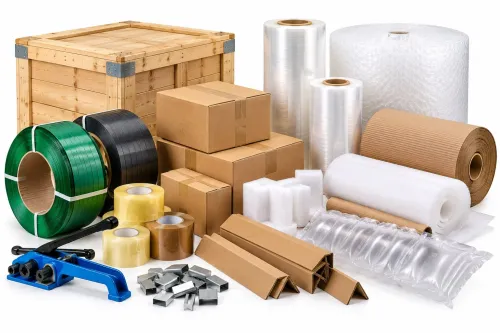
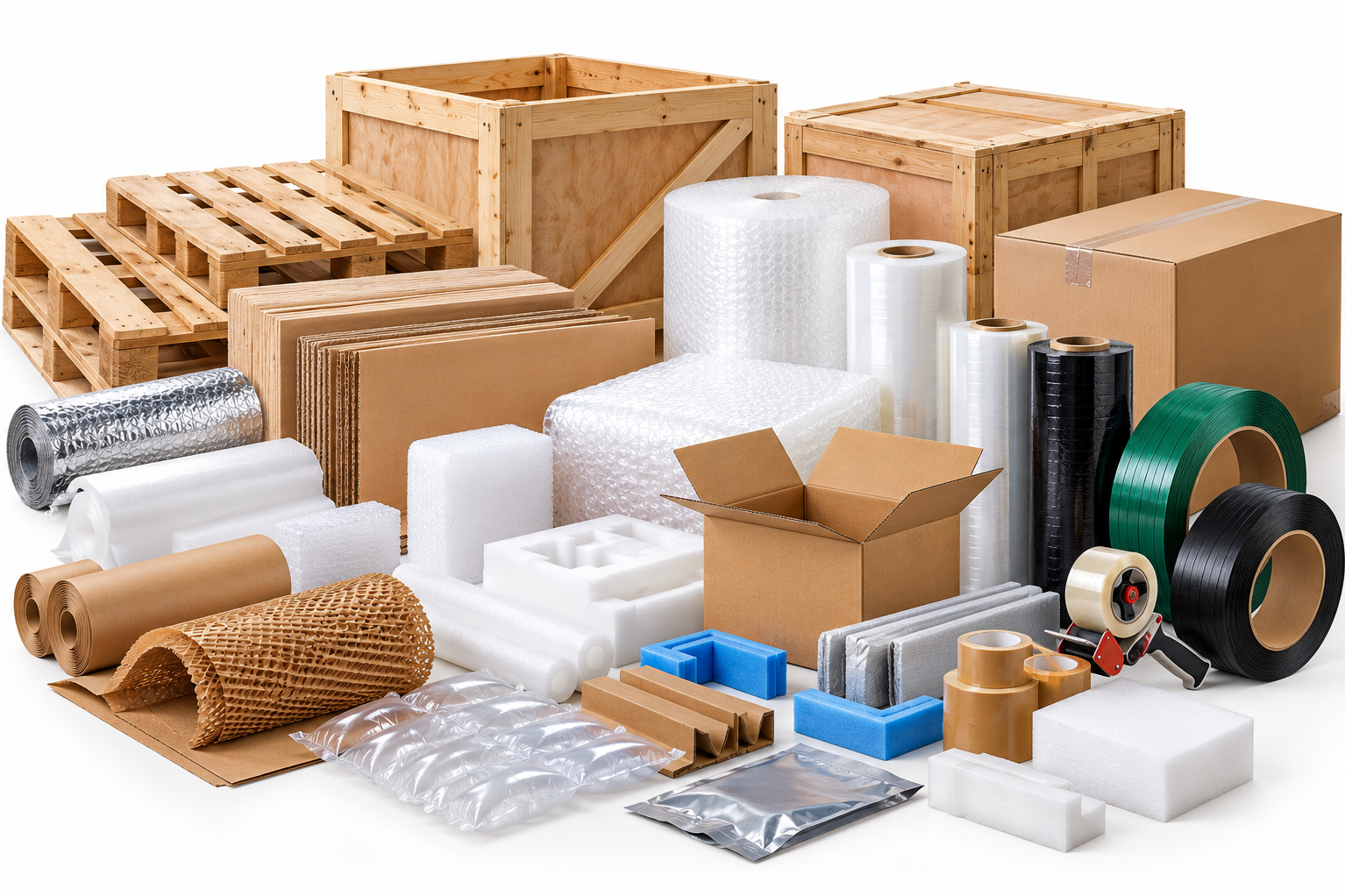
Choosing appropriate Industrial Packaging Material therefore requires an understanding of the product and its complete journey.
For manufacturing and engineering companies in Nandurbar, this becomes important when goods move between plants, warehouses, distributors and customers throughout North Maharashtra and beyond.
Start With the Product Being Packed
Packaging should be designed around the characteristics of the item.
Consider:
- Dimensions
- Weight
- Fragility
- Surface sensitivity
- Sharp edges
- Moisture sensitivity
- Storage duration
- Stacking requirements
- Transport method
A heavy fabricated component and a delicate precision item clearly require different packaging approaches.
Consider the Entire Handling Cycle
Damage often occurs because packaging is designed only for transportation.
The product may also be moved by forklift, stacked in a warehouse, transferred between vehicles and handled several times before reaching its destination.
Each stage introduces potential stress.
Packaging design should therefore consider how the package will be lifted, stored, secured and opened.
Avoid Both Underpacking and Overpacking
Insufficient protection can lead to damage, returns and rework.
Excessive packaging can increase material consumption, labour, storage space and disposal requirements.
The objective is not to use the greatest amount of packaging. It is to use an appropriate combination of materials for the risk.
Where possible, businesses can evaluate packaging performance using actual handling conditions and damage records.
Standardise Repeat Requirements
Manufacturers shipping similar components repeatedly can benefit from documented packaging specifications.
A standard may define material type, quantity, wrapping method, cushioning arrangement, labelling and sealing requirements.
This reduces variation between shifts and makes procurement forecasting easier.
Review Packaging After Dispatch
Post-dispatch feedback provides valuable information.
If products repeatedly arrive with damage in the same area, the packaging system may need modification.
Similarly, if customers consistently report excessive packaging that is difficult to handle, there may be an opportunity to optimise the design.
Frequently Asked Questions
Is thicker packaging always safer
No. Performance depends on material properties, product characteristics and the type of hazard being controlled.
Should export packaging be evaluated differently
It may need additional consideration because transit duration, handling stages, environmental exposure and destination requirements can differ.
How can packaging costs be controlled
Standardising frequently used configurations, monitoring damage and matching materials to actual risks can help reduce unnecessary consumption.
Selecting Industrial Packaging Material on total handling requirements rather than purchase price alone can improve both protection and operational efficiency.
Innovative Safety Solutions works with businesses requiring industrial supplies across different workplace applications. For companies in Nandurbar, evaluating packaging as part of the complete logistics process can help create a more practical procurement strategy suited to North Maharashtra's manufacturing and distribution requirements.
Keywords