

Industrial packaging has to do more than make a product ready for dispatch. It may need to protect components from impact, dust, moisture, movement, abrasion, handling damage, or storage conditions throughout the supply chain.
Choosing appropriate Industrial Packaging Material is therefore an operational decision for manufacturers, engineering companies, warehouses, distributors, and logistics businesses in Nandurbar.
Begin With the Product Being Packed
There is no universal packaging solution for industrial goods.
Before selecting materials, consider:
- Product weight and dimensions
- Fragility
- Surface sensitivity
- Exposure to moisture
- Storage duration
- Transportation method
- Stacking requirements
- Number of handling stages
- Domestic or long-distance movement
A heavy engineering component has different packaging needs from precision parts, electrical equipment, fabricated products, or small industrial components.
Understand the Role of Different Materials
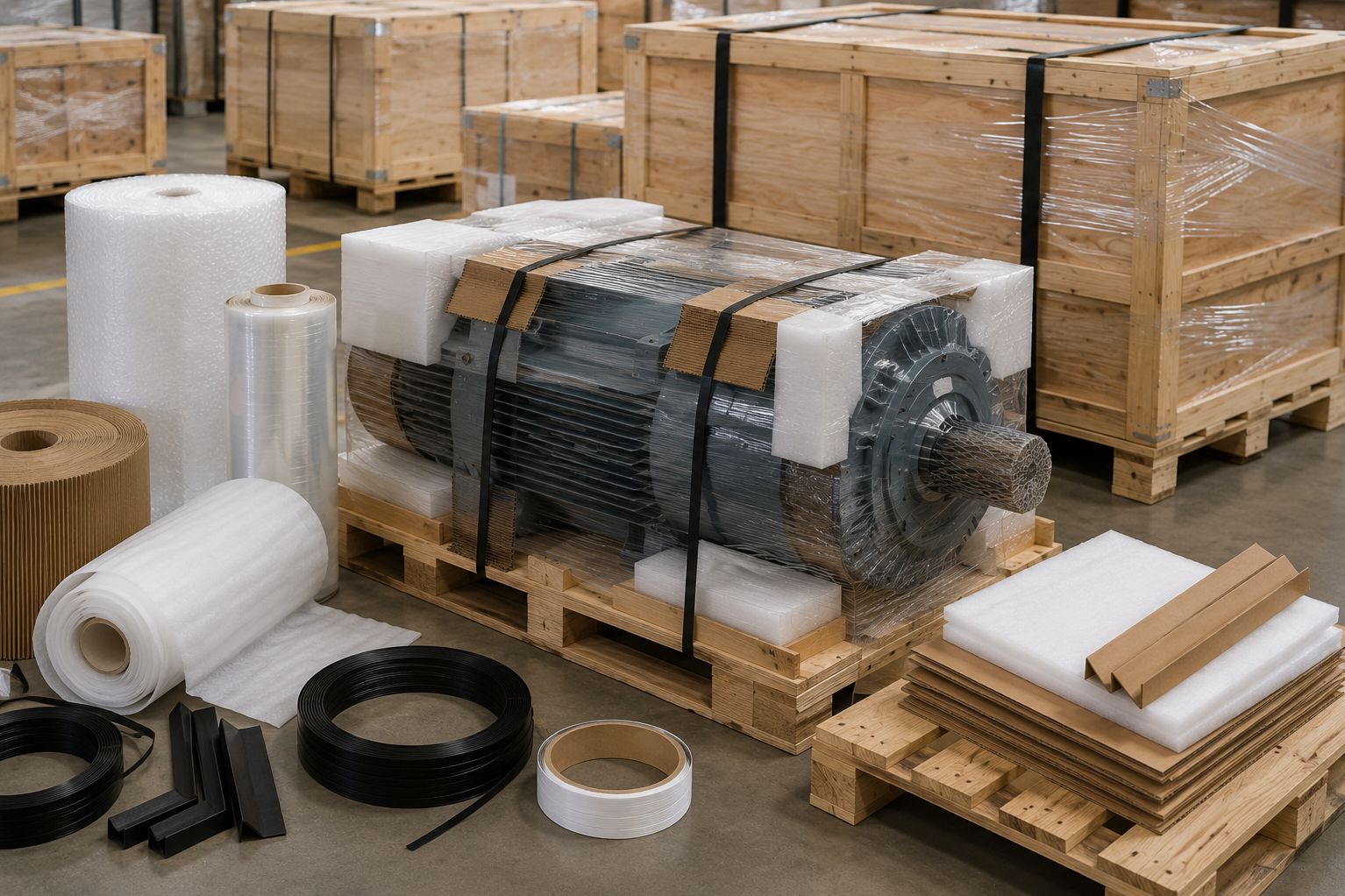
Industrial packaging may use combinations of wrapping, cushioning, strapping, protective films, tapes, edge protection, pallets, and other materials.
Wrapping can help protect surfaces from dust and contamination. Cushioning may reduce movement or absorb shock. Strapping can help secure loads, while edge protectors may prevent concentrated pressure from damaging cartons or products.
The right combination depends on the load rather than a standard packing formula.
Avoid Excessive Packaging
Using more material does not automatically provide better protection.
Over-packaging increases material consumption, handling effort, waste, and transportation weight. Under-packaging, on the other hand, can lead to product damage and customer complaints.
Businesses should aim for sufficient protection based on realistic handling and transportation conditions.
Standardisation Can Improve Efficiency
Companies shipping similar products repeatedly can benefit from developing standard packaging specifications.
Standardisation can make material consumption more predictable, simplify worker training, improve packing speed, and reduce inconsistent packing practices between shifts.
However, unusual or customised products should still be evaluated separately.
Consider the Complete Journey
Packaging decisions should account for what happens after a product leaves the factory.
Will it be loaded manually? Will multiple packages be stacked? Will it travel by road for several days? Will it remain in storage before reaching the customer?
These questions often reveal requirements that are not obvious when considering only the product itself.
INNOVATIVE SAFETY SOLUTIONS supplies packaging and workplace-related materials for industrial requirements. Businesses in Nandurbar and across North Maharashtra can benefit from selecting packaging according to the actual product journey rather than relying solely on standard materials.
Effective industrial packaging balances protection, handling convenience, material use, storage, and transportation requirements.