Parking areas are often treated as low-risk spaces, yet they combine moving vehicles, reversing manoeuvres, pedestrians, visitors and limited visibility. Poorly planned parking can create congestion and unnecessary conflict before anyone even enters the workplace.
Effective Parking Safety Solutions should organise movement rather than simply maximise the number of vehicles that can fit into a space.
For industrial and commercial properties in Nashik, parking management is increasingly relevant as facilities across North Maharashtra handle employees, contractors, delivery vehicles and visitors simultaneously.
Separate Different Types of Movement
Begin by identifying who uses the parking area.
Employee cars, visitor vehicles, motorcycles, delivery trucks and pedestrians may need different routes or designated spaces.
A parking assessment should examine:
- Entry and exit flow
- Pedestrian paths
- Reversing areas
- Blind spots
- Speed
- Parking bay layout
- Loading activity
- Emergency access
- Night-time visibility
The objective is to reduce unnecessary crossing points and uncertainty.
Select Products According to Their Function
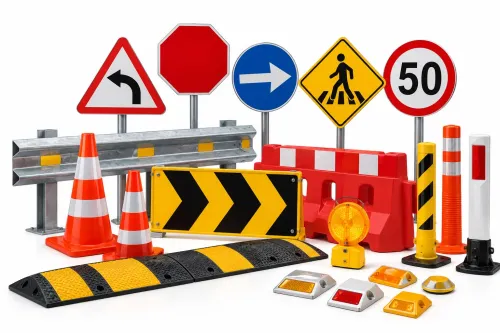
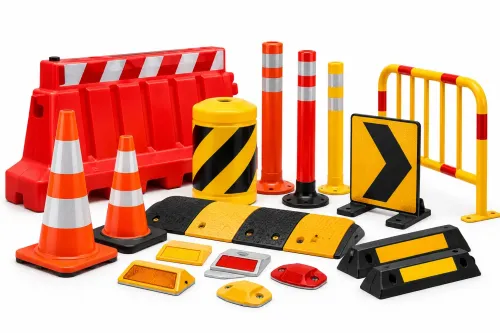
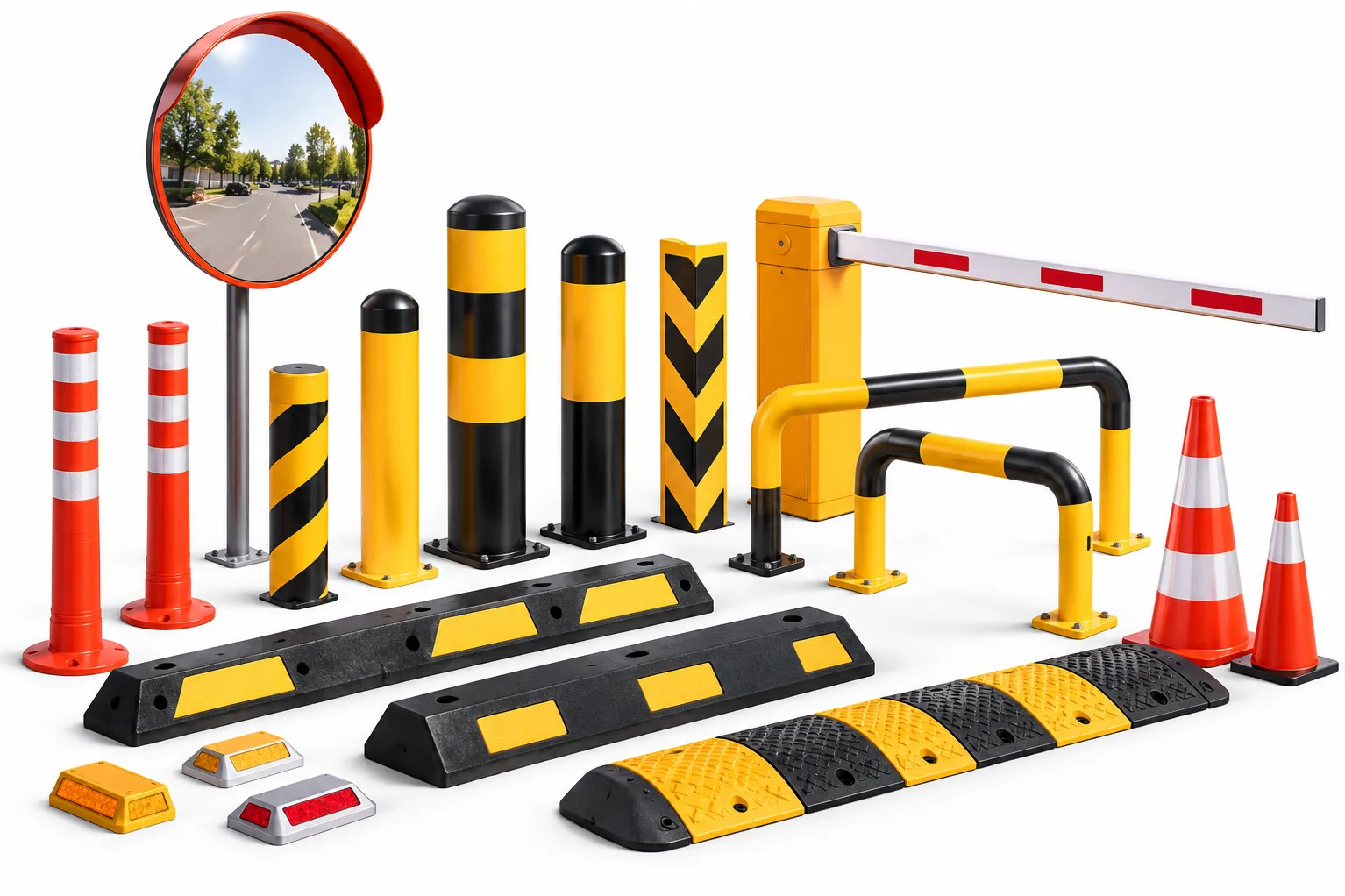
Parking management may use wheel stops, bollards, corner protection, barriers, delineators, signs, mirrors and other products depending on site design.
Each item should address a defined problem.
For instance, a wheel stop can help establish a stopping position but does not replace pedestrian separation. A convex mirror may improve visibility at a selected blind location but does not eliminate the need for appropriate driving procedures.
Understanding these limitations prevents overreliance on individual products.
Consider Installation Quality
Even a suitable parking product can become ineffective when installed poorly.
Placement should consider vehicle dimensions, pedestrian movement, drainage, surface condition and the manufacturer's installation requirements.
Products should not introduce new trip hazards or obstruct emergency routes.
Where physical fixing is required, the substrate and intended loading conditions also matter.
Inspect the Parking Area After Implementation
After changes are introduced, observe whether users behave as expected.
Drivers may ignore a route that feels impractical. Pedestrians may create shortcuts if designated walkways significantly increase walking distance.
Real-world observation helps facilities identify whether the arrangement needs adjustment.
Calculate Value Through Avoided Disruption
The return from Parking Safety Solutions is not limited to preventing vehicle damage.
Better parking organisation can support smoother gate movement, clearer visitor access, improved loading coordination and reduced internal congestion.
For busy industrial sites, these operational benefits can matter every working day.
Frequently Asked Questions
What should be addressed first in an unsafe parking area
Start with movement patterns, pedestrian interaction, blind spots, speed and emergency access before choosing products.
Are parking safety products suitable for warehouses
Yes, depending on the application. Warehouses may need controls for yards, loading areas and employee parking as well as internal traffic systems.
How often should parking products be inspected
Inspection frequency depends on traffic levels, product type and site conditions. High-contact areas may require more frequent checks.
Innovative Safety Solutions supports organisations evaluating workplace and traffic safety requirements. For businesses in Nashik, combining appropriate products with thoughtful layout planning can make Parking Safety Solutions considerably more effective.
Across North Maharashtra, the principle remains simple: manage movement first and select equipment to reinforce that plan.
Keywords