
Construction sites change almost every day. Excavation areas appear, scaffolding moves, materials are relocated, vehicles enter different zones, and new teams begin working as the project progresses. Because conditions continuously evolve, selecting suitable Construction Safety Material is an important part of site planning.
For construction projects in Dhule, North Maharashtra, safety requirements can vary considerably between residential developments, commercial buildings, infrastructure projects, industrial construction, and renovation work.
Start With the Main Site Hazards
Before preparing a safety material list, identify the activities taking place on the site.
Typical risks may involve:
- Working at height
- Falling objects
- Vehicle and equipment movement
- Excavations and open edges
- Electrical work
- Cutting and welding activities
- Material handling
- Slippery or uneven surfaces
- Restricted work areas
Once these hazards are understood, safety products can be selected according to actual site requirements.
Personal Protection Is Only One Part
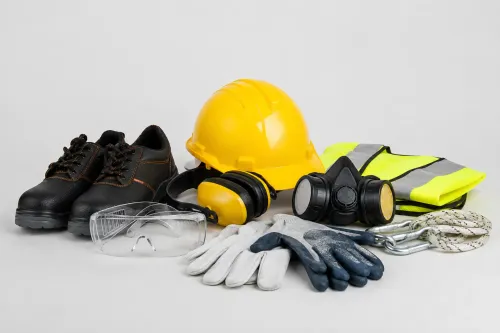
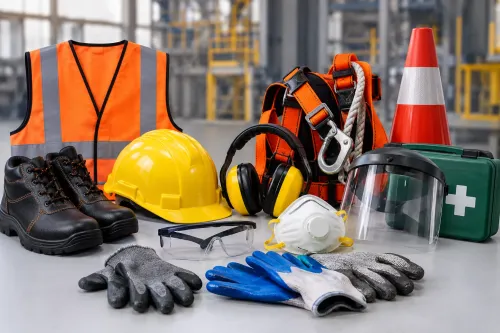
Helmets, safety shoes, gloves, reflective jackets, goggles, and harnesses are widely associated with construction safety. However, site-level protection also depends on controlling movement and communicating hazards.
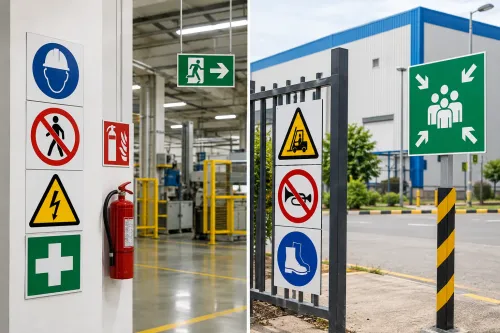
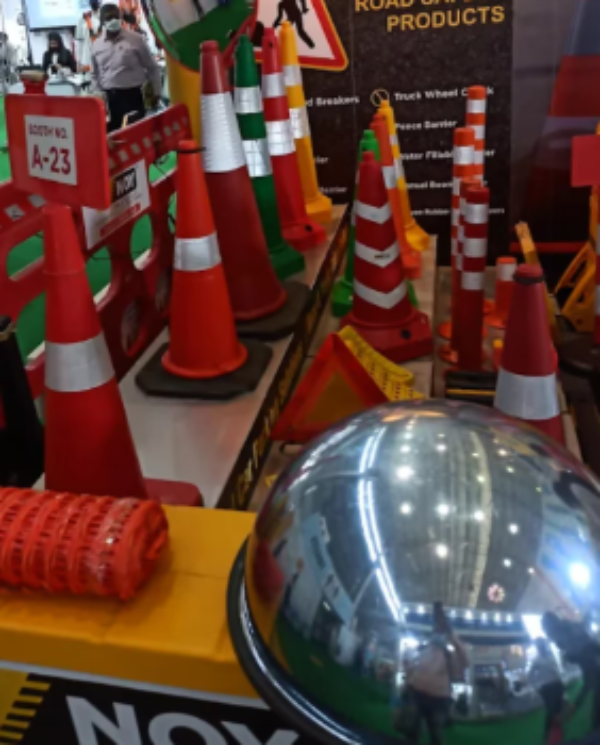
Construction projects may therefore require barricading products, safety cones, warning tapes, caution boards, directional signage, reflective products, road safety items, and temporary access-control solutions.
The combination should help workers and visitors understand where they can move and where additional caution is required.
Visibility Becomes Critical Around Moving Vehicles
Construction sites often have trucks, loaders, cranes, forklifts, and other equipment operating near workers.
High-visibility clothing, reflective markings, cones, barriers, and clear movement routes can make traffic areas easier to identify. Entry and exit points should also be marked so that workers, drivers, contractors, and visitors can navigate the site more predictably.
Consider the Project Stage
Safety requirements during excavation will not necessarily remain the same during structural construction, finishing work, or external development.
A useful practice is to review safety material requirements at major project milestones. Products that are no longer needed can be relocated, while additional items can be introduced as new hazards emerge.
Maintain and Replace Safety Products
Damaged helmets, faded signs, broken barricades, worn reflective products, or deteriorated safety tapes should not remain in service simply because they are still physically present.
Regular inspection makes it easier to identify products that need cleaning, repositioning, repair, or replacement.
INNOVATIVE SAFETY SOLUTIONS supplies construction-related safety products for different project requirements. For contractors, developers, infrastructure companies, and project teams operating across Dhule and other parts of North Maharashtra, a planned approach to construction safety materials can simplify procurement while supporting more organised site operations.
The most useful safety material list is ultimately the one developed around the real activities and changing risks of the project.