A catalogue full of helmets, gloves, footwear and barriers does not prove that the products suit your hazards or meet a usable performance standard. By the end, you will have a practical way to define the specification, verify supplier evidence, compare product-level test data and judge whether the supplier can support your safety programme after delivery.
Key takeaways
- Start with task hazards, exposure routes, severity and duration.
- Ask for manufacturer identity, batch traceability and supplier records.
- Match PPE to performance data, fit and application limits.
- Test whether support covers selection, training, replacement and follow-up.
Start With the Hazard Assessment, Not the Catalogue
Write the purchase requirement from the hazard assessment, not from the supplier’s product count. Record each task, hazard, exposure route, likely severity, exposure duration, environment and user group, then convert those findings into measurable performance requirements.
- Impact protection for falling objects, flying particles or collisions
- Penetration resistance where sharp edges, nails, needles or fragments could breach the product
- Cut protection levels in gloves and materials, matched to the blade or abrasion hazard
- Heat, flame, chemical splash or chemical permeation resistance, including concentration, temperature and contact time
- Electrical insulation, voltage limitation, noise reduction, visibility or fall-arrest performance where those hazards exist
Give the supplier the completed requirements and ask for a product that satisfies each one, rather than accepting a visually similar substitute. The response should state the tested performance, size range, material or formulation, application limits, expected service conditions and approved accessories.
Define compatibility before ordering. Check whether eyewear breaks a respirator seal, earmuffs fit beneath the helmet, or a harness connects to the specified anchor hardware. A glove selected for one chemical concentration or temperature can fail against another mixture.
If the supplier cannot explain these limits and provide sizing or compatibility guidance, its catalogue cannot define what your workplace needs.
Verify the Supplier, Manufacturer and Product Trail
Before placing an order, demand verifiable company, source and product records—not just a catalogue, logo or CE mark.
1. Record the supplier’s legal business details: registered name, registration or tax number, physical address, invoice name and returns contact. Reject quotations that use only a trading name or mobile number.
2. Confirm the manufacturer identity and exact product model. If the seller is an authorised distributor, request a current manufacturer authorisation letter or a listing on the manufacturer’s website. Match the manufacturer, importer and address on the packaging, declaration and invoice.
3. Require batch and lot traceability before delivery. The records must connect each item to its batch, lot or serial number, manufacturing date, manufacturing site and shipment invoice. Ask how the supplier identifies affected stock during a recall or field correction; a catalogue SKU alone is not enough.
4. For EU PPE, obtain the EU Declaration of Conformity showing the exact model and applicable harmonised standards. Check the notified-body name and number where third-party assessment applies. For Indian safety helmets, compare the ISI licence number and manufacturer details with BIS records.
5. Inspect the evidence trail for changes. A report for an earlier revision, different coating, filter medium, fastener or factory does not prove the supplied item matches. Keep the invoice, declaration, batch records, service documents and written returns process with your purchasing file.
Request Product-Specific Standards and Test Evidence
Treat a standard as product evidence only when the document names the exact model you will receive. A supplier’s ISO 9001 certificate scope proves that a quality-management system covers stated activities and sites; it does not prove that every helmet, glove or barrier meets a product standard.
Check the issuing certification body, covered manufacturing site and expiry status.
Request records tied to the quoted model:
- A test report showing the model or revision, material, test date, laboratory identity and accreditation, standard edition, conditioning method and pass/fail result. A report for a similar product or older revision is not interchangeable evidence.
- For an Indian product, the applicable BIS standard and current licence or conformity evidence. For a helmet, perform ISI mark verification by matching the licence number, manufacturer, model and size range with BIS records; reject missing or unreadable identification.
- For EU PPE, the EU Declaration of Conformity, exact harmonised standards and notified-body details where required. A CE mark alone is insufficient.
- For a respirator, the NIOSH approval number and exact approved configuration. Check the model in the NIOSH Certified Equipment List and confirm that the facepiece and filters match the approval.
- For fire extinguishers, classification, placement instructions, service labels, hydrostatic-test status where applicable and the servicing organisation’s qualifications.
Ask for written change notification. A new coating, filter medium, fastener or manufacturing site can invalidate an earlier report. For high-visibility clothing, require the ANSI/ISEA 107 type or performance class, or ISO 20471 class, garment label and care limits.
Compare PPE by Performance, Fit and Application Limits
A product mark does not prove that the product suits your hazard. Compare the exact model’s tested performance, size range, compatible accessories and application limits.
| PPE | Technical details to compare | Application limit to check |
|---|---|---|
| Helmet | Impact, penetration, suspension and accessory ratings; electrical-insulation certification and voltage limit | A helmet rated for industrial impact is not automatically electrical protection; chin straps, lamps and face shields can change the approved configuration |
| Safety shoe | Safety shoe toe-cap impact rating, puncture-resistant midsole, slip resistance, sole heat resistance and chemical compatibility | A steel toe does not protect against penetration, solvents or prolonged heat unless those properties are separately tested |
| Glove | Kevlar glove cut level, tear and puncture results, grip, dexterity, cuff length and chemical breakthrough time | Cut resistance does not equal protection from needles, heat, solvents or moving machinery |
| Face shield | Face shield optical class and impact rating, splash or molten-metal marking, shade level and headgear compatibility | Clear impact protection does not provide welding-filter, chemical-splash or ultraviolet protection by itself |
| Earmuff | Attenuation rating by frequency, headband force, cushion seal and helmet compatibility | A high headline attenuation value fails if glasses, hair or a helmet breaks the seal |
Ask for the product-specific test report, size chart, user instructions and cleaning limits. For EU-supplied PPE, match the model to its EU Declaration of Conformity, harmonised standards and notified-body details where required. Then have users try the equipment with their normal clothing, eyewear and other PPE; poor fit creates the failure the rating cannot prevent.
Test the Supplier’s Support for Complete Safety Systems
Supplier support is adequate only when it connects each item to a usable system. Ask for application limits, sizing data, compatibility checks, user training, inspection instructions, servicing arrangements and a written replacement process—not only a product quotation.
- For fall-arrest equipment, obtain the rated capacity and intended configuration for the harness, lanyard or lifeline, connectors and anchorage together. The supplier must address fall clearance, swing-fall exposure, connector compatibility, inspection and prompt rescue. Confirm that each fall-arrest anchorage supports at least 5,000 lb per attached employee, or forms part of a qualified-person-designed system with a safety factor of two.
- For respirators, record the respirator NIOSH approval number and verify the exact facepiece, cartridges and filters in the NIOSH Certified Equipment List. Require support for medical evaluation, fit testing, cartridge-change schedules, cleaning, storage, training and written notification before any approved component changes.
- For high-visibility clothing ANSI/ISEA 107, specify the garment type, performance class, background colour and material, retroreflective material, design and care limits. A vest may not provide enough conspicuity where traffic requires a full-body garment.
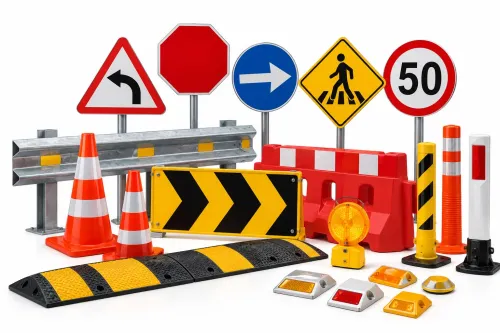
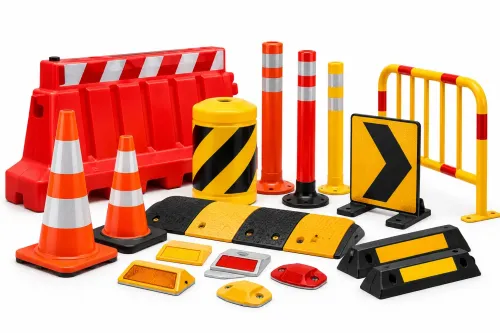
- For road work, require installation, inspection and replacement guidance for MUTCD crashworthy devices, including the approved setup for the traffic speed and work-zone layout.
INNOVATIVE SAFETY SOLUTIONS should be judged by whether its advice exposes conflicts such as eyewear breaking a respirator seal, hearing protection losing attenuation under a helmet or chemical gloves lacking data for your actual mixture and temperature.
Related products
 | INDUSTRIAL SAFETY SHOES 👞 Safety Shoes – By Innovative Enterprises (Safetywala), Ambad, Nashik 📞 Contact: Mr. Mayur R. View product → |
 | Industrial Safety By Innovative Enterprises (Safetywala), Ambad, Nashik 📞 Contact: Mr. Mayur R. View product → |
Frequently asked questions
What should you define before contacting an industrial safety material supplier?
Document each task, hazard, exposure route, likely severity, exposure duration, work environment and user group. Convert those findings into measurable performance requirements.
How can you verify an industrial safety supplier and product trail?
Request the supplier’s legal and manufacturer details, product model, batch or lot number, technical data sheet, purchase records and traceability documents.
What product evidence should you request before buying safety equipment?
Ask for product-specific standards, test reports, certificates, technical specifications, instructions for use and stated application limits. Check that the evidence matches the exact model.
How should you compare PPE from different suppliers?
Compare tested performance, fit, compatibility with other PPE, comfort during the full task and limits such as chemicals, temperature, impact or wear duration.
What supplier support is needed beyond delivering safety products?
Check whether the supplier can help with hazard-based selection, sizing, user training, inspection, replacement schedules, documentation and review of the complete safety system.
Related products
 | Industrial Safety By Innovative Enterprises (Safetywala), Ambad, Nashik 📞 Contact: Mr. Mayur R. View product → |
 | Personal Protective Equipment (PPE) ⛑️ Safety Helmets – By Innovative Enterprises (Safetywala), Ambad, Nashik 📞 Contact: Mr. Mayur R. View product → |
 | Industrial Safety By Innovative Enterprises (Safetywala), Ambad, Nashik 📞 Contact: Mr. Mayur R. View product → |
 | Security Equipment By Innovative Enterprises (Safetywala), Ambad, Nashik 📞 Contact: Mr. Mayur R. View product → |