

Road markings are expected to communicate continuously while being exposed to vehicle movement, sunlight, rain, dust, and changing road conditions. Their performance depends not only on the marking material but also on surface preparation and application quality.
Before Providing and Applying Thermoplastic Paint on roads, industrial premises, parking areas, or internal traffic routes in Nandurbar, several practical factors should be reviewed.
Inspect the Surface Condition
A marking can only perform properly when the underlying surface is suitable.
Before application, the area should be assessed for dust, loose material, moisture, oil, damaged surfaces, and existing markings. Surface contamination can affect adhesion and result in premature deterioration.
Cleaning and preparation should therefore be treated as part of the application process rather than an optional preliminary task.
Confirm the Marking Layout
The required lines, arrows, symbols, crossings, parking bays, or other markings should be identified before work begins.
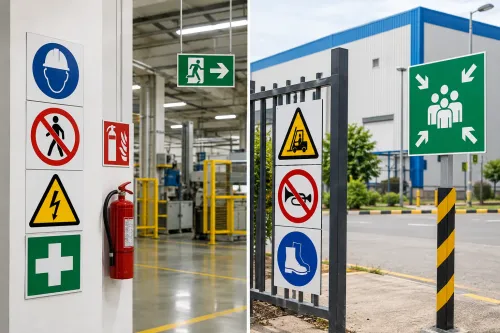
This is especially important for parking facilities and industrial premises, where marking layouts may need to coordinate vehicle lanes, pedestrian routes, loading areas, reserved spaces, and restricted zones.
Accurate pre-marking helps reduce alignment problems during application.
Consider Visibility Requirements
Road markings should remain distinguishable under the conditions in which they will be used.
Colour contrast, marking dimensions, surface condition, and reflective requirements may need consideration depending on the application. Night-time visibility can be particularly relevant on roads and continuously operating industrial sites.
Plan Traffic Management During Application
The work area should remain protected while preparation and application activities are underway.
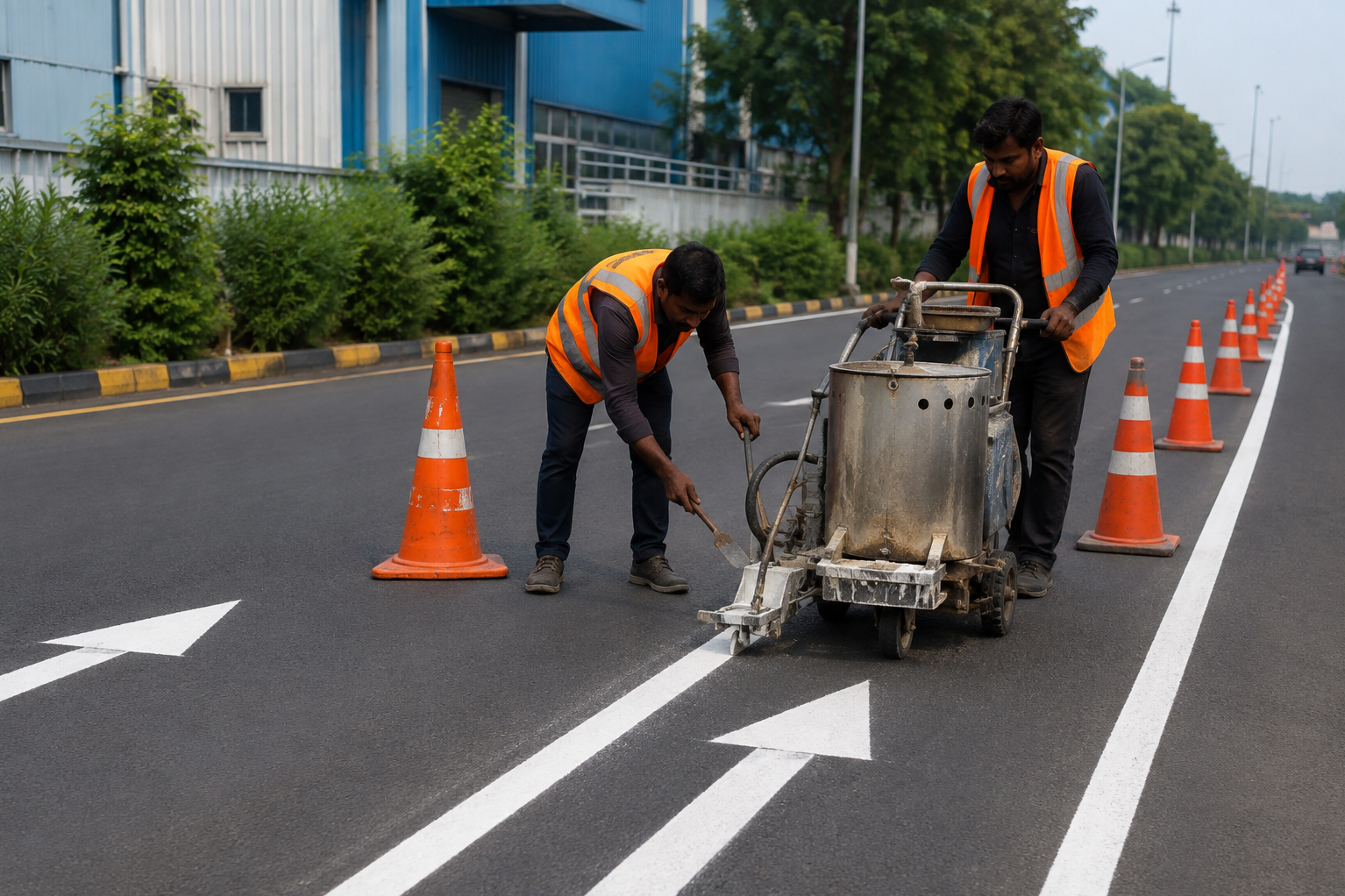
On operational roads or busy premises, this may require temporary barricading, cones, warning signs, or planned traffic diversion. Scheduling the work during lower-traffic periods can also reduce disruption.
Evaluate Application Quality
Uniformity matters. Uneven lines, inconsistent thickness, poor edges, or inaccurate positioning can affect both appearance and functionality.
Customers should discuss the project scope, road or surface condition, marking pattern, and expected application requirements before work begins.
INNOVATIVE SAFETY SOLUTIONS undertakes thermoplastic road marking requirements for suitable applications. For projects in Nandurbar, North Maharashtra, careful surface assessment and execution planning can make a meaningful difference to the finished marking.
Thermoplastic marking should be approached as a complete process involving site inspection, surface preparation, layout, application, traffic control, and final quality checks.