Road and parking markings perform a simple but important job: they tell drivers and pedestrians how a space is intended to be used. When lines fade, routes become unclear and parking areas gradually lose their organisation.
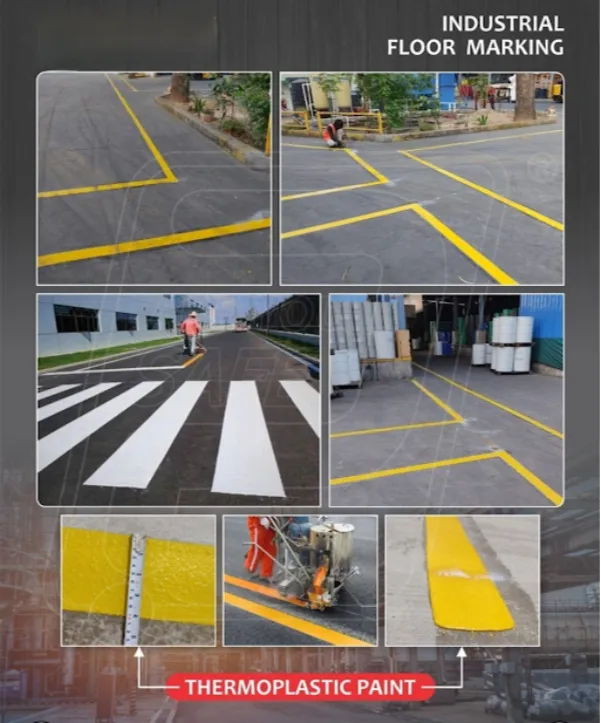
Thermoplastic Paint Application is commonly considered for selected road, traffic and parking marking requirements where durable, visible markings are needed.
For facilities and projects in Jalgaon, understanding surface preparation and application conditions is essential before selecting this marking method for North Maharashtra sites.
Assess the Surface Before Application
Marking performance depends heavily on the condition of the substrate.
The surface should be evaluated for contamination, moisture, deterioration, existing coatings and other conditions that may interfere with adhesion.
Applying marking material over a poorly prepared surface can reduce performance regardless of the quality of the material itself.
Plan the Layout Before Work Starts
Marking should follow an approved traffic or parking plan.
Before application, confirm:
- Lane positions
- Parking bay dimensions
- Direction arrows
- Pedestrian crossings
- Stop lines
- Restricted areas
- Loading zones
- Required symbols
- Interface with existing signage
Setting out the layout beforehand reduces corrections after material has been applied.
Understand the Application Process
Thermoplastic road-marking material is applied using specialised processes and equipment. The precise method depends on the material specification, surface and project requirements.
Temperature control, preparation, application thickness and site conditions can influence the finished result.
Traffic should be appropriately controlled during the work so the application area remains protected until the marking is ready for use.
Consider Visibility Requirements
Road markings are not only about creating white or coloured lines.
Night visibility and wet-weather conditions may influence material and application requirements depending on the project.
Where reflective performance is specified, suitable materials and application methods should be used according to the required standard.
Inspect the Markings After Installation
Post-application review should check alignment, coverage, dimensions and obvious defects.
Over time, facilities should monitor areas exposed to heavy turning, braking or repeated vehicle movement because these locations can experience greater wear.
Maintenance planning helps prevent markings from deteriorating to the point where routes become difficult to interpret.
Frequently Asked Questions
Can thermoplastic markings be applied to every surface
Suitability depends on the substrate, condition, preparation requirements and product system. The surface should be assessed before application.
How long does thermoplastic road marking last
Service life varies with traffic, surface quality, application, material specification, weather and maintenance. A universal lifespan should not be assumed.
Can it be used in industrial parking areas
It may be suitable for selected parking and traffic applications where the surface and project requirements support its use.
Successful Thermoplastic Paint Application depends as much on preparation and layout planning as on the marking material itself.
Innovative Safety Solutions can support organisations evaluating road and parking safety requirements. For projects in Jalgaon, proper surface assessment, controlled application and ongoing inspection can help markings remain useful within the demanding operating conditions encountered across North Maharashtra.
Keywords